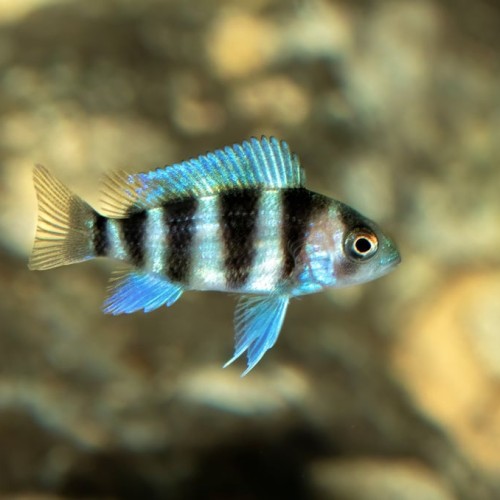
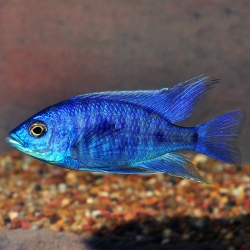
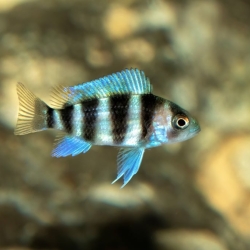
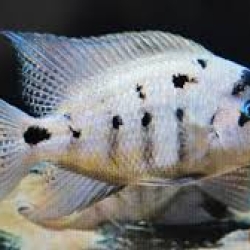
The Frontosa Cichlid (Cyphotilapia frontosa), also known as the Humphead Cichlid, is a large, majestic freshwater fish from Lake Tanganyika in East Africa known for its distinct black vertical bars, blue hues, and a prominent cranial hump that develops with age. They are relatively peaceful for cichlids but require specific water conditions and a large aquarium.
Key Characteristics
Size: Males can grow up to 12–16 inches (30–40 cm), while females typically reach 8–12 inches (20–30 cm). They are slow-growing, taking several years to reach full size.
Lifespan: With proper care, they can live for 15 to 25 years in captivity, making them a long-term commitment.
Temperament: They are considered semi-aggressive but are quite calm compared to other cichlids. They are best kept in a group (5 or more is recommended) to form a natural social hierarchy.
Habitat: Endemic to the deep, rocky areas of Lake Tanganyika, they prefer a dimly lit environment with plenty of large caves and rock formations for hiding.
Diet: As carnivores, they primarily feed on smaller fish and invertebrates in the wild. In an aquarium, they should be offered a protein-rich diet of high-quality sinking pellets, frozen mysis shrimp, krill, and chopped seafood.
Aquarium Requirements
Minimum Tank Size: A minimum of 75 gallons is recommended for a single adult, but a group requires a much larger tank, around 125 to 150 gallons or more to ensure adequate space and reduce territorial stress.
Water Parameters: Stability is key. They thrive in hard, alkaline water, mimicking their natural lake conditions:
Temperature: 74–80°F (24–26°C).
pH: 8.0–9.0.
Hardness: 10–20 dGH (degrees of General Hardness).
Filtration: Due to their large size and high bioload, powerful filtration (e.g., external canister filters) is essential to maintain excellent water quality.
Aquascape: Use a sand or fine gravel substrate with plenty of stable rock formations to create caves and hiding spots. They are known to dig, so ensure all structures are secure. Dim lighting is preferred.